Overview
This year, our team has made major progress in multiple directions:
-
Technology: Together with our developers, we architected, developed and released revolutionary new technologies, enabling people to launch their own app, their own currency, contests, recurring subscriptions, roles, governance, and more.
-
Customers: We’ve worked with event organizers and powered large conferences and events from Prague to Washington DC to NYC. We’ve even begun handling payments and internal currencies for some of them. Look out Luma and Eventbrite! See below for the results.
-
Investors: We raised money from strategic investors, and some of our early investors from years ago have now re-invested in our upcoming initiatives.
-
Regulations: We treat the regulatory landscape like we treat the technological one: how can we design effective global solutions within the currently existing frameworks?
-
Local: Those initiatives involve a platform for Restaurants, including loyalty points. Launching with 30 restaurants in NYC, and then rolling out worldwide in over 100+ countries thanks to our user base of small community leaders.
-
Global: They also involve a peer-to-peer, uncensorable livestreaming platform for content creators and influencers, who can now be paid by their global audience using recurring subscription fees and micropayments.
-
Teaching: Together with our video team, we started to record the third season of the Intercoin Show on our YouTube Channel, interviewing more people about Communities, Capitalism and Freedom of Speech. We’re now testing our own technology (Telegram Bots, Livestreaming to YouTube, Flash Mobs on X, etc.) to boost our videos. See the results below.
-
Moonshots: We even made significant progress on “moonshots” like Liberia Coin, to help countries like Liberia issue their own national coins backed by Intercoin technology.
Let’s talk about each one in turn.
1. Technology.
Our core development team has been together for years, and still consists of Andrey, Artem and Liubomyr, who work on our Web2 (social), Web3 (blockchain) and Peer-to-Peer (webrtc) technologies, respectively. Led by our CEO, Greg Magarshak, who’s been architecting this vision for over 15 years and whose apps have attracted 7 million people in over 100 countries:
Web2 (social)
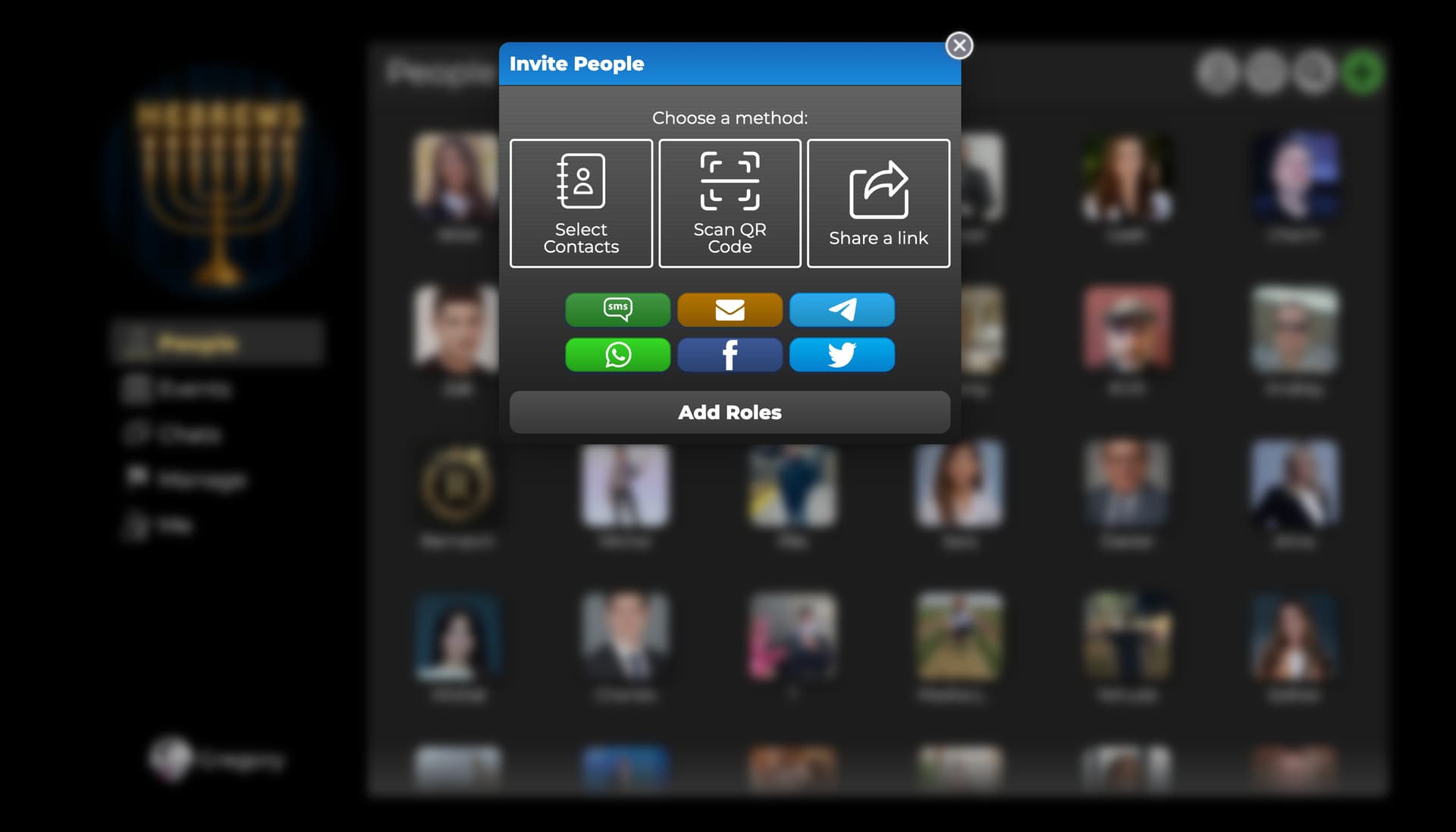
This year, we’ve released modules to power Calendars, Events, Payment Plans, Videoconferencing, Livestreaming, and more. We’ve integrated deep support for both Facebook Apps and Telegram Bots, as well as seamless email @ and mobile # for two-way communications. We’ve also integrated with Discourse (a fellow open source ecosystem) as well as X (formerly Twitter). We’ve even integrated with web3 wallets for blockchain integration. This is what the options look like:
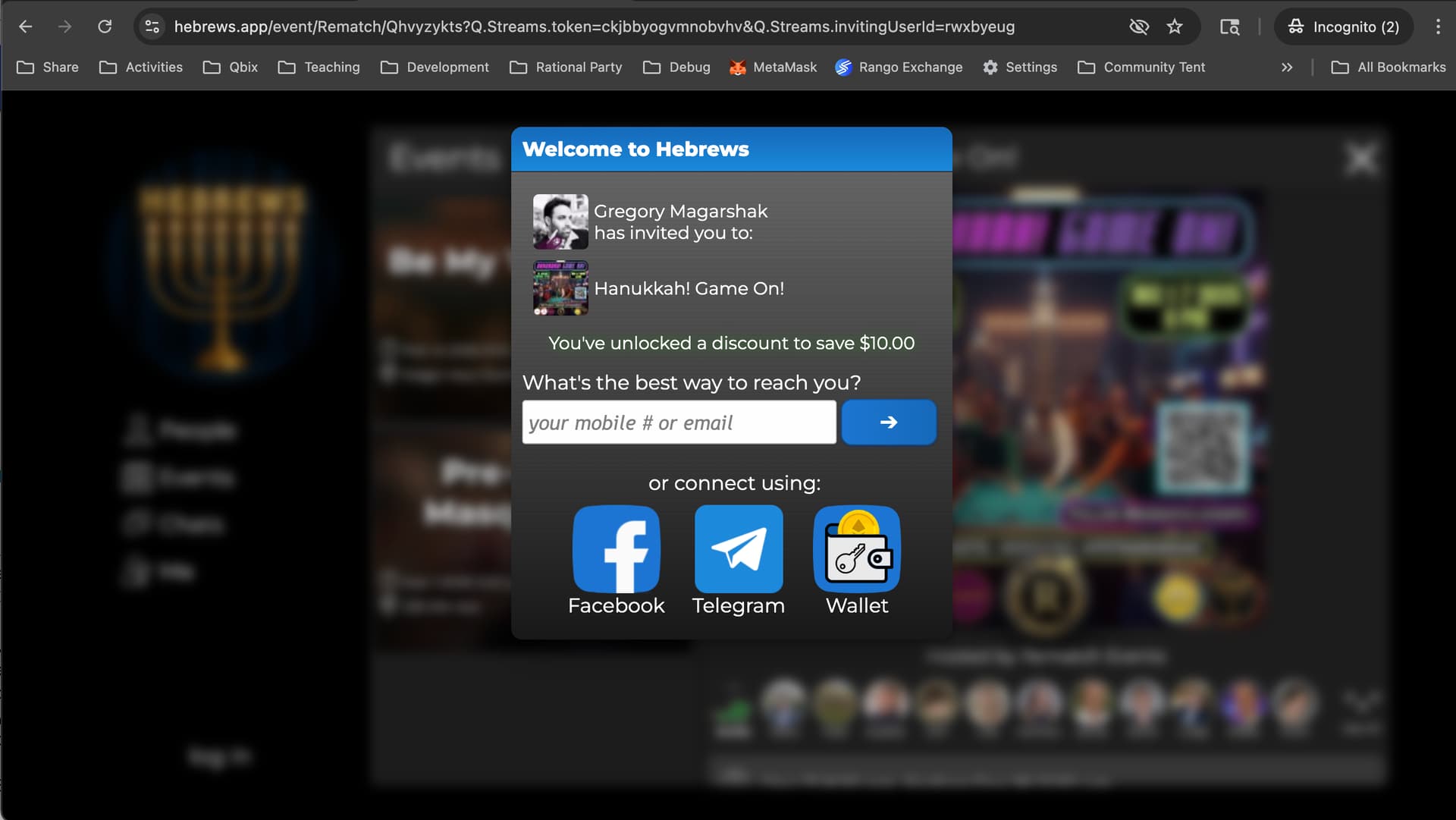
Incidentally, the Hebrews.app is us testing out our own technology. We’ve used it to organized our own events for Hanukkah, and ended up with over 100 people signing up within 2 weeks. Here’s what the result looks like on Instagram and Facebook. We already have follow-up events planned in early 2026 with thousands of dollars in food/catering sponsorships, and venues like the Plaza Hotel NYC. Our technology can help grow and supercharge any community, by helping people connect after the events, form relationships, facilitate dealflow, depending on the vertical. For our external customers, see below.
Web3 (blockchain)
In the first phase of its roadmap, Intercoin has become to Web3 what Qbix was to Web2. We built the applications that organizations and communities around the world needed in order to transact with confidence. Community Roles. Recurring Membership Fees. Micropayments and Payouts. Auctions. Contests. Even voting and governance (see our CEO’s article on blockchain voting in CoinDesk and Yahoo Finance).
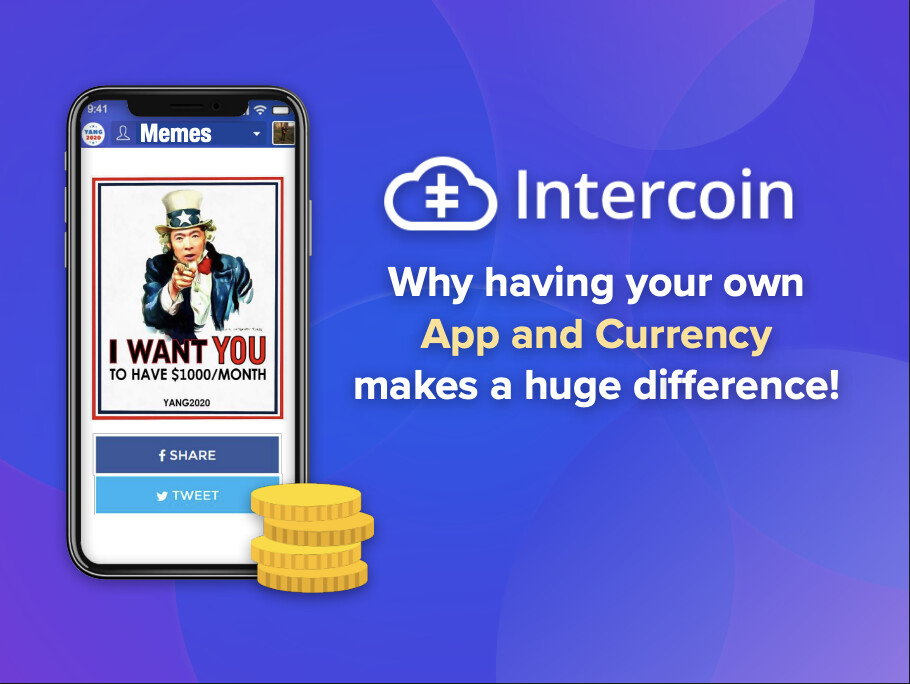
Once you’ve released your own app, the next step is to release your own currency. Our social technology goes far beyond Mastodon and other open source projects. And our blockchain technology is designed to make Web3 as seamless easy to use as Stripe for Web2 payments. It’s designed to liberate people from being locked into big tech software. It gives every community leader a choice that allows them to retain all their data and relationships, instead of giving them away to LinkedIn, WhatsApp, X, Telegram, YouTube and enriching them. To find out more, click here:
Security
We’ve had security audits done by some of the top firms in both web2 and web3:
- Web2: Qbix Platform - Code Audit Report (August 2018) by Paragon Initiative Enterprises
- Web3: Intercoin’s ITR Cross-Chain Trading Token - Audit Report (August 2025) by CertiK
When building distributed systems that millions of people would have to rely on, to secure billions of dollars, it is important to get things right. A major key to the security of Intercoin’s technology is our ubiqitous use of the Factory pattern in Smart Contracts and Immutability of the code in each Release. Our innovative ReleaseManager technology is designed to make sure all smart contracts in our ecosystem can trust each other, leaving organizers and staff to focus on running their community and events, rather than worrying about getting rugpulled by some one-off smart contract written by an anonymous dev. We are currently raising money to, among other things, perform a deep security audit of all our other smart contracts.
2. Customers
Our customers are essentially communities. It turns out communities are willing to pay a lot for sovereignty and control. They want to own their own data, brand and relationships, instead of giving them away to LinkedIn, Facebook and WhatsApp. Influencers want to monetize their own content, perhaps in their own coin. Global businesses want solve their issues with payments, and break free of their dependence on banks and their fees. We have our work cut out for us.
Conferences
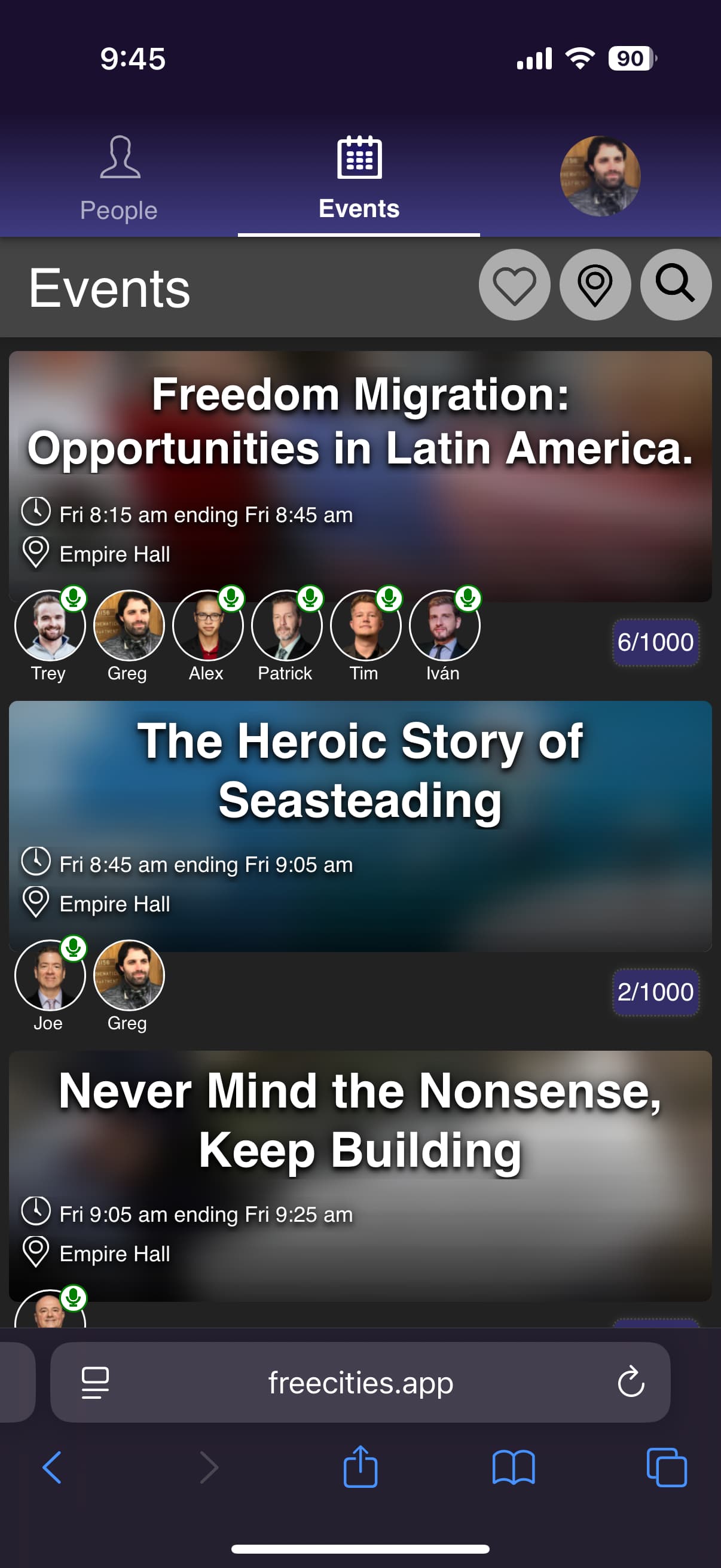
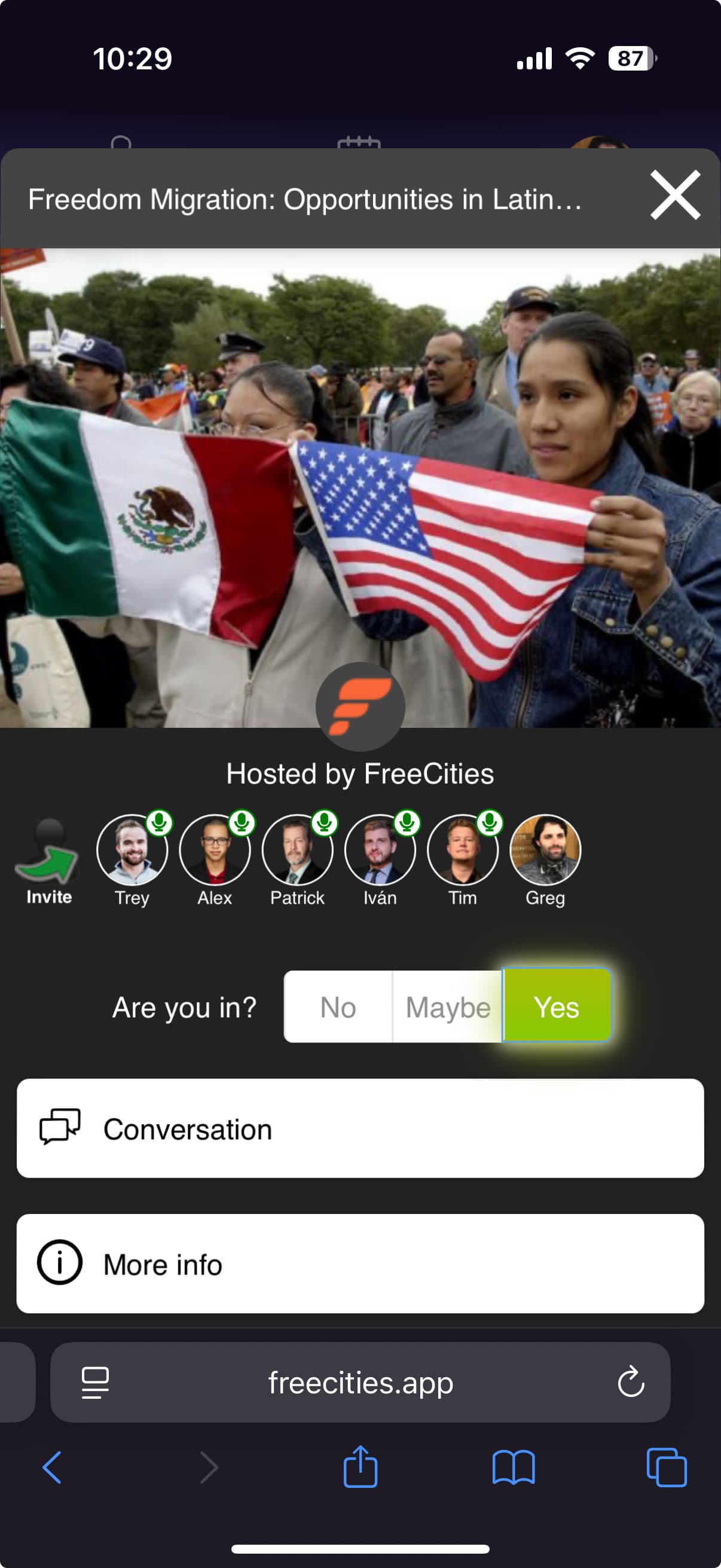
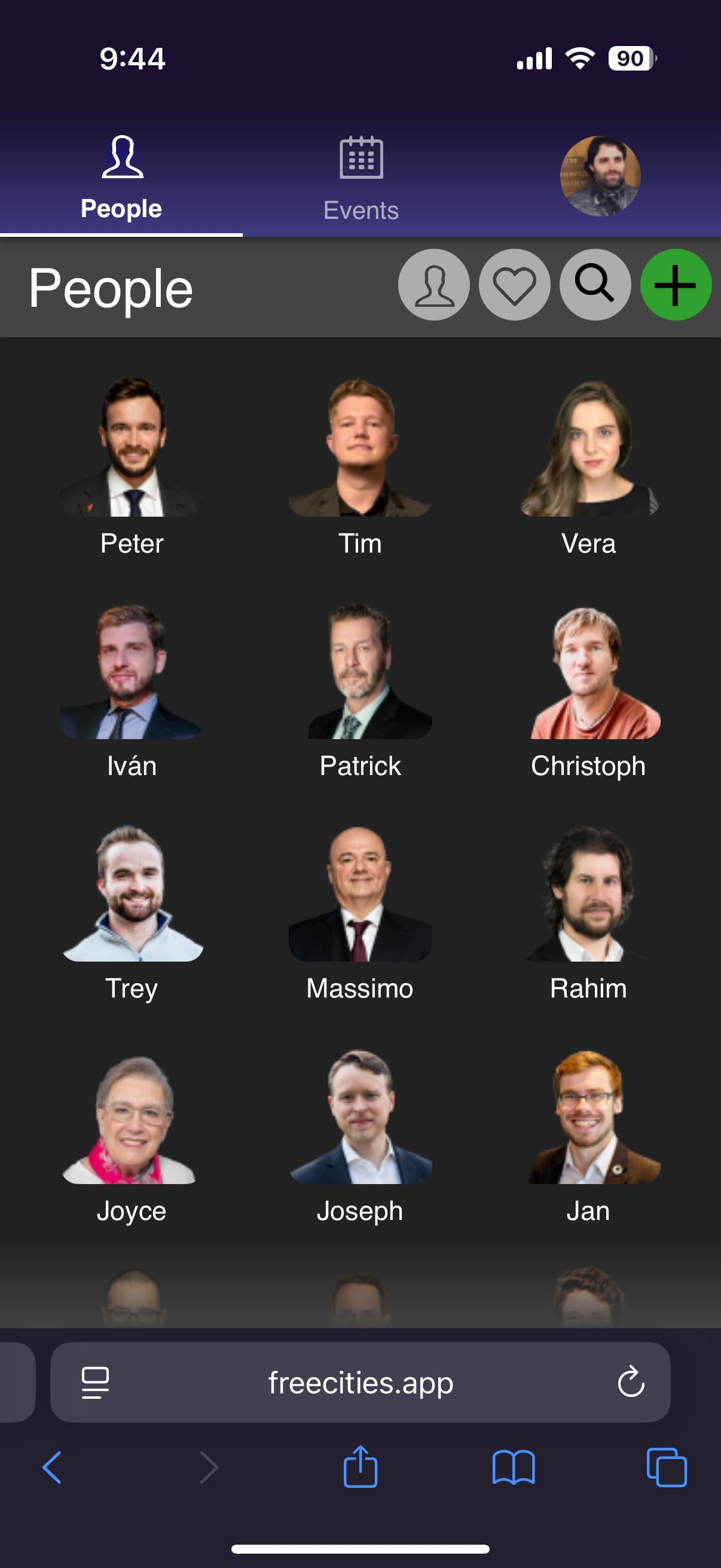
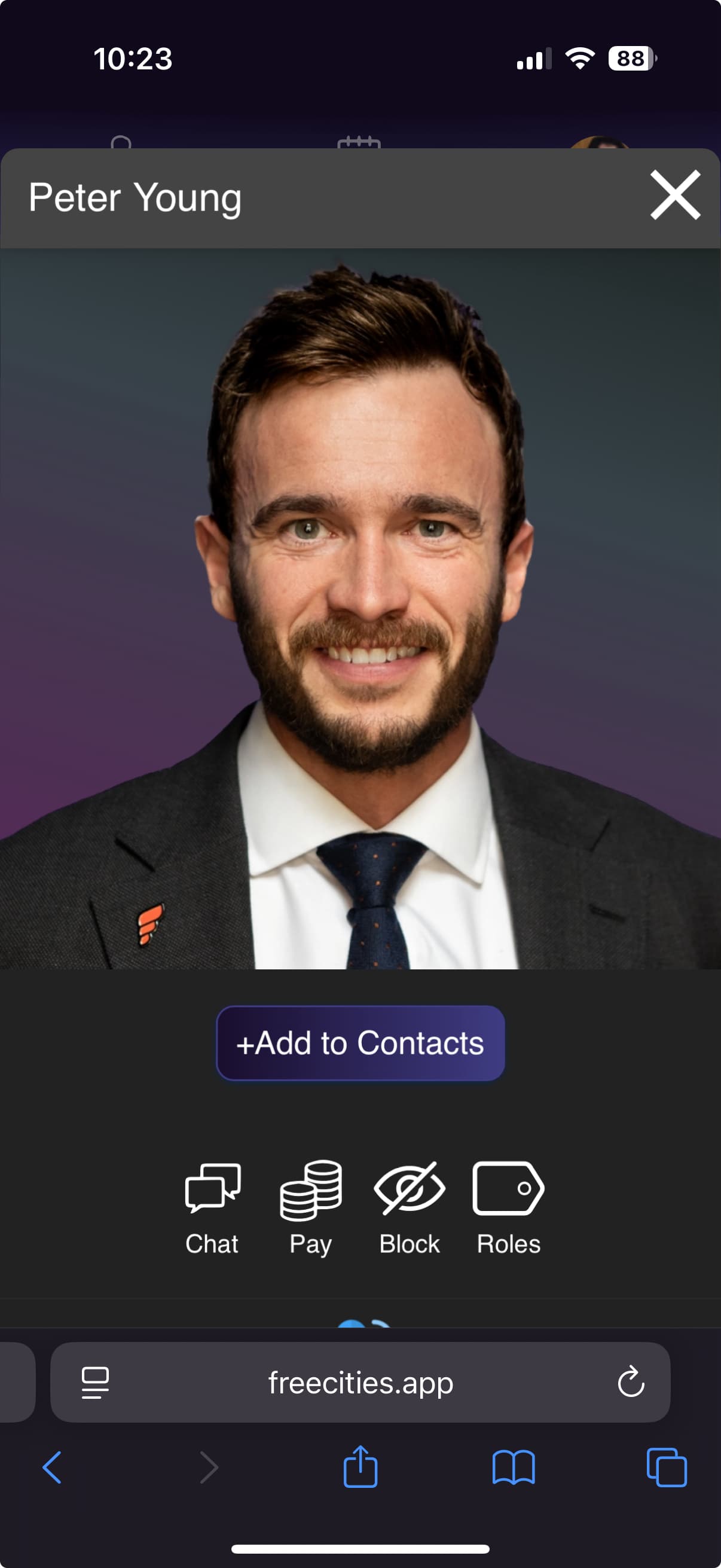
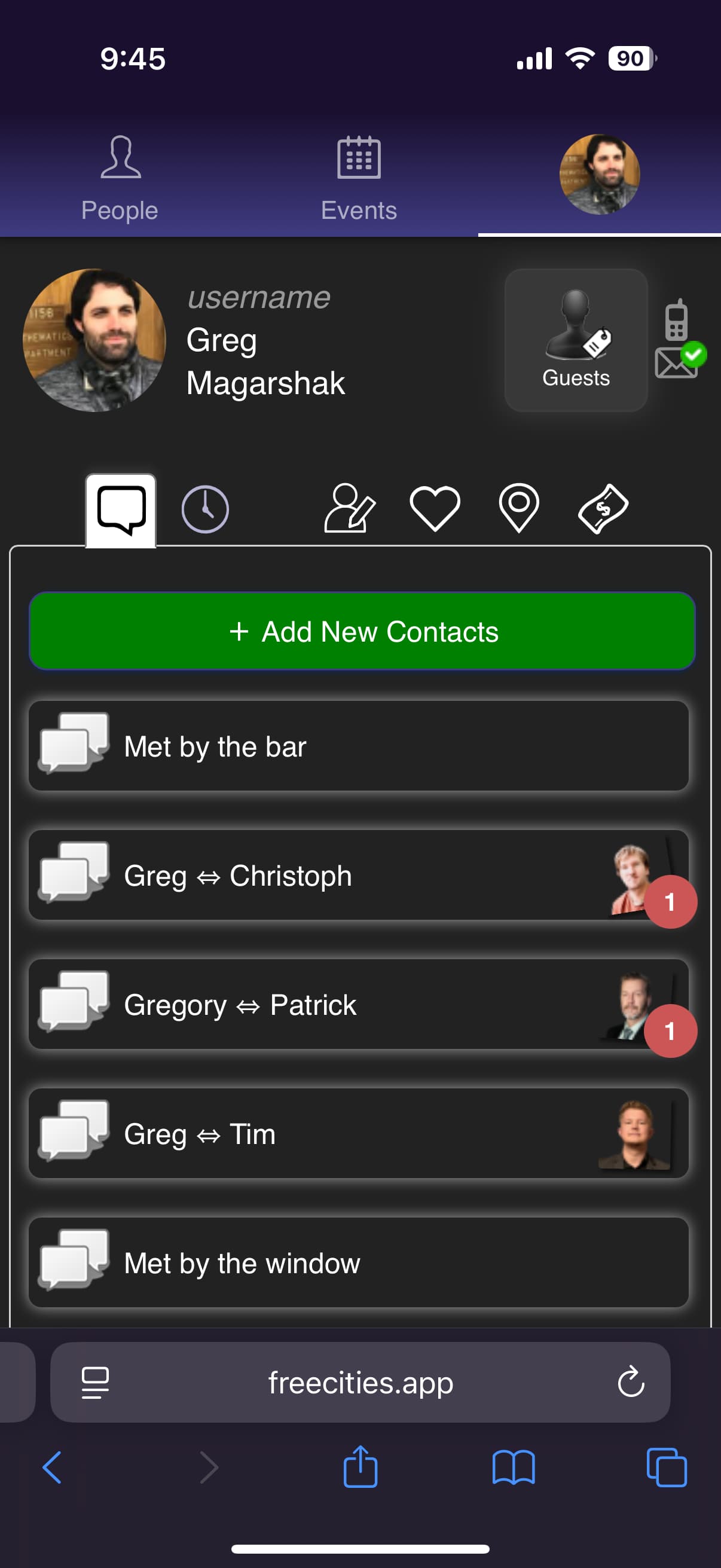
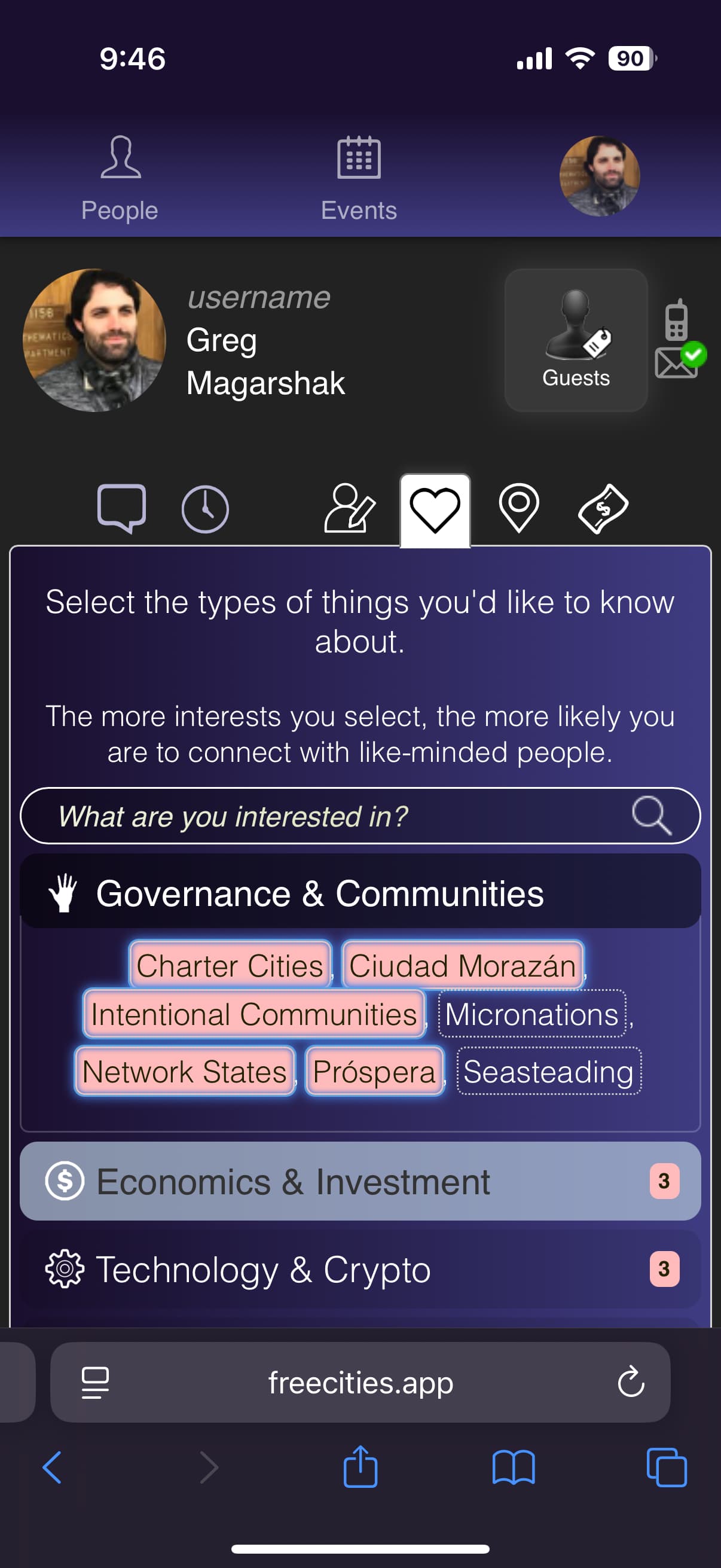
Last month, we built FreeCities.app to support the Free Cities conference, an annual conference that brings together libertarians who have invested millions of dollars in startup cities, seasteading and other physical communities. Our CEO Greg Magarshak flew to Prague, where he presented the app on stage to the audience:

You can see the full stream here:
This is what freecities.app looks like:
Other Event Organizers
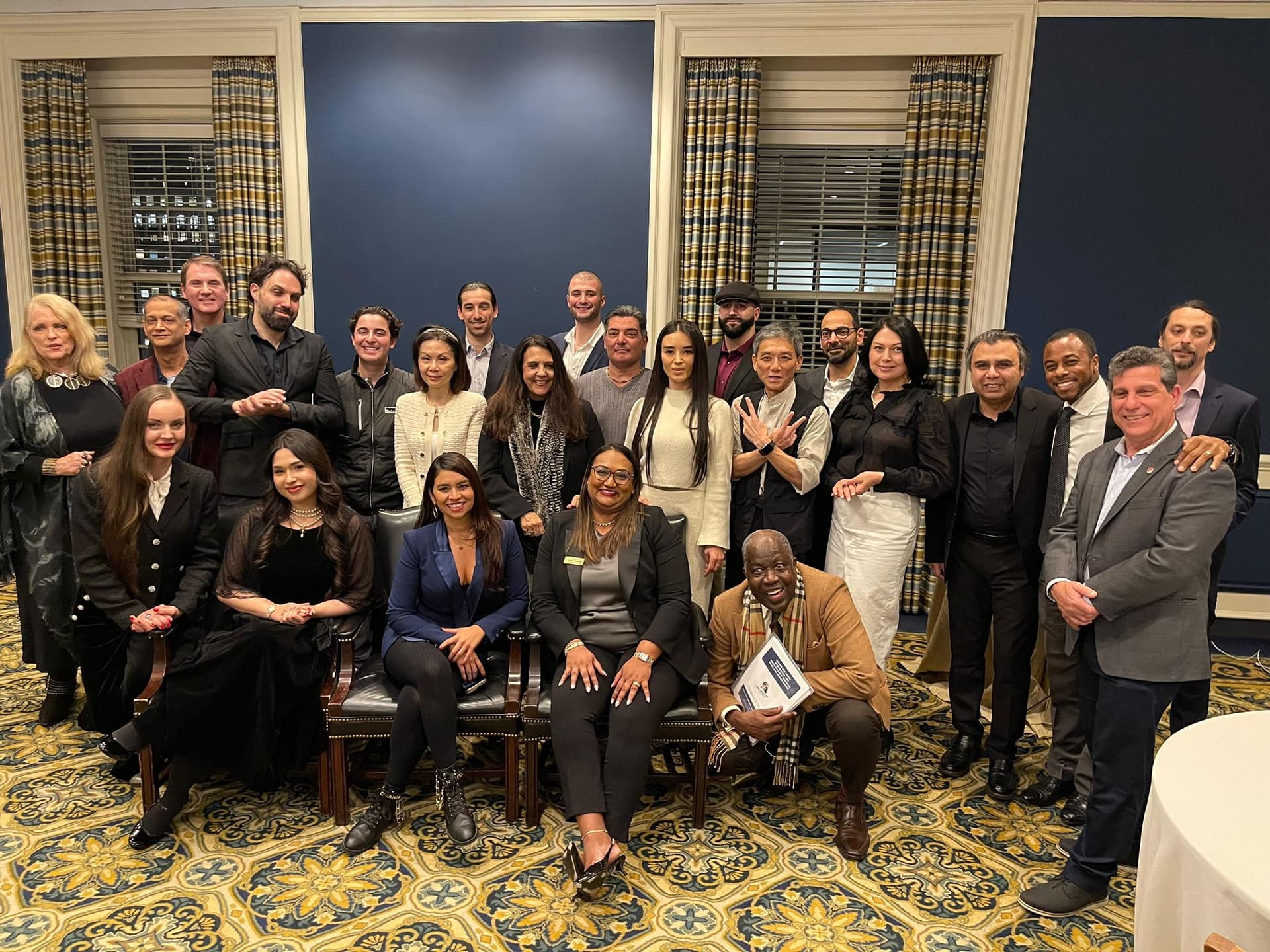
Two weeks ago we launched an app for an event here at the Yale club. We deployed a new technology there, allowing the presenters to control the screen from their personal phone instead of a clicker, and designing an interactive experience for the audience, with questions and answers. Here is how it works:
Wide Range of Customers
A few earlier testimonials from satisfied clients shows the range of customers we can serve:
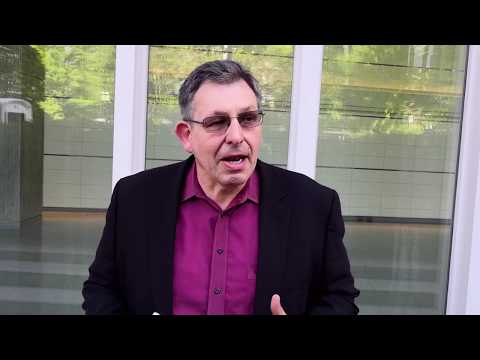
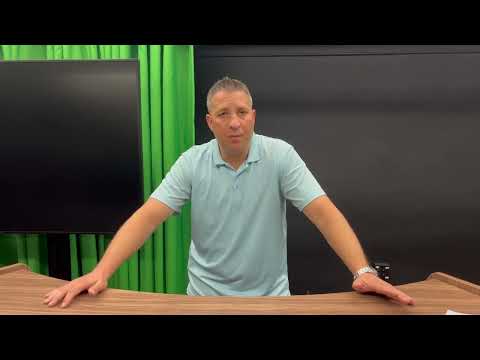

We re-use all our software components, both Web2 and Web3, across customers, and are even working on an automated sales funnel and AI Agents to help automate building and supporting these applications at scale, in 2026. Every time we fix a bug in a chatroom or livestreaming solution, it gets fixed across all our customers. They’re paying for solutions today, but the technology will become better and better over time.
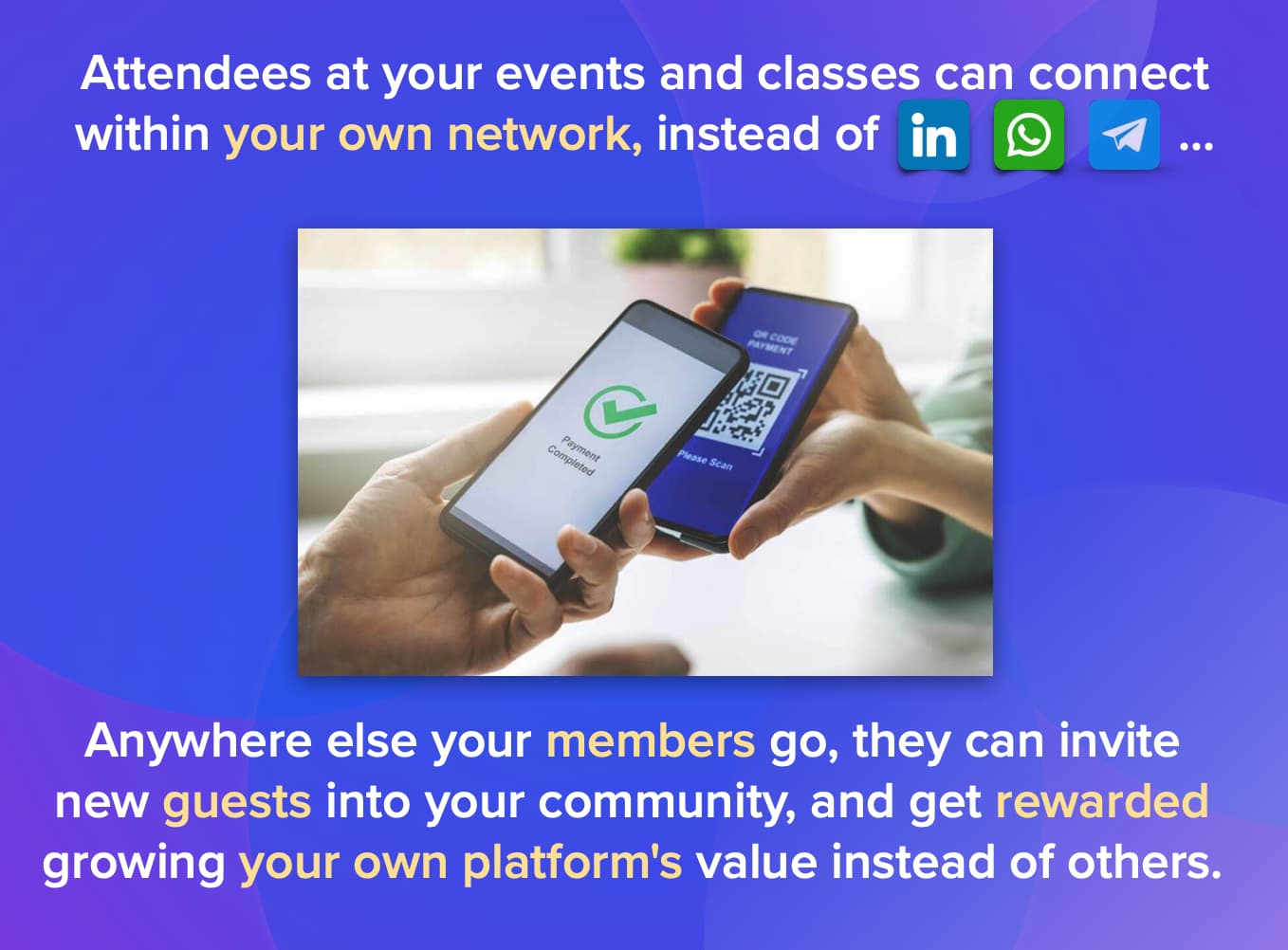
As a result, we like to treat our customers as early partners and investors. When asked how much it will cost, we offer them the opportunity to buy the ITR token, which they can then use to get discounted pricing on our services, or to hold for a year and then sell to other customers and communities that will be coming into the ecosystem. In the meantime, we work closely with our customers to help them launch their own app, their own currency, grow their community, and create stronger connections. While it may cost money to invest in your own brand and network, it Metcalfe’s law says it will pay super-linear dividends as people start connecting within your network instead of losing them to Big Tech:
3. Investors
We are still very early. Our open source Web5 technology, despite being very powerful, has only been used with a select number of launch partners. But through our previous apps, we now have access to around 1 million community leaders, for communities in over 100 countries, ranging in size from 20 to over 1,000 members. It is these community directors, and their staff and members, that can serve as our sales force when it comes time to distribute our platform around the world.
Intercoin’s investor roadmap is very straightforward:
- Architect and Document our technology (
 Done)
Done) - Build the solutions and get Security Audits (
 Largely done )
 - Early Pilot Integrations with Selected Communities ( Doing now )
- AI automation of Sales, Customization and Support
- Roll out our Mass Market solutions worldwide through our access to a million community leaders:
Our pitch is simple: we are the Microsoft of both Web2 + Web3, which we call Web5:
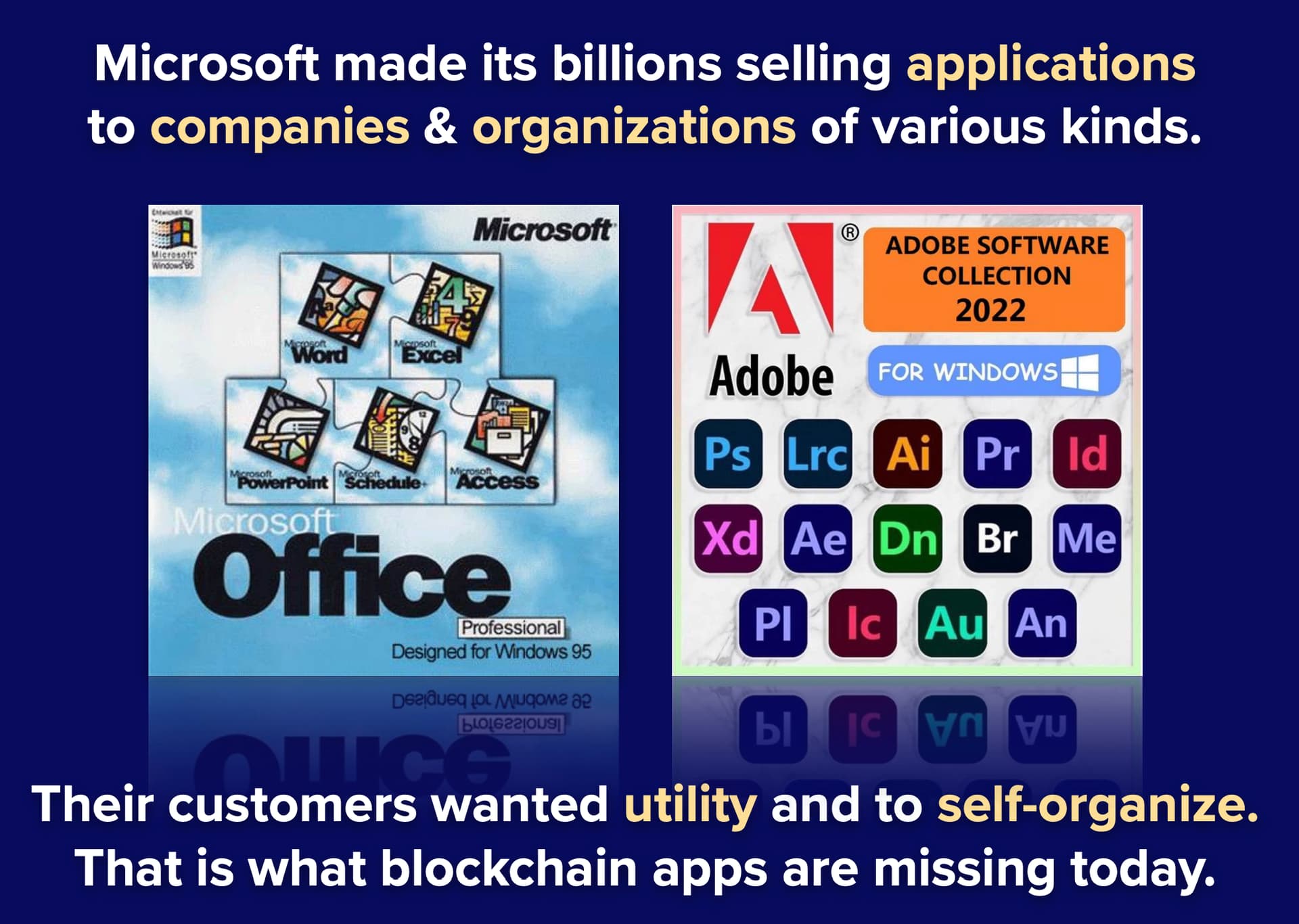
What the original World Wide Web did to liberate people from the gatekeepers of the time (TV, Radio, Magazines) and let them publish globally using open protocols like HTTP, we are now doing for Web2 (liberating social from Big Tech) and Web3 (liberating commerce from Banks):
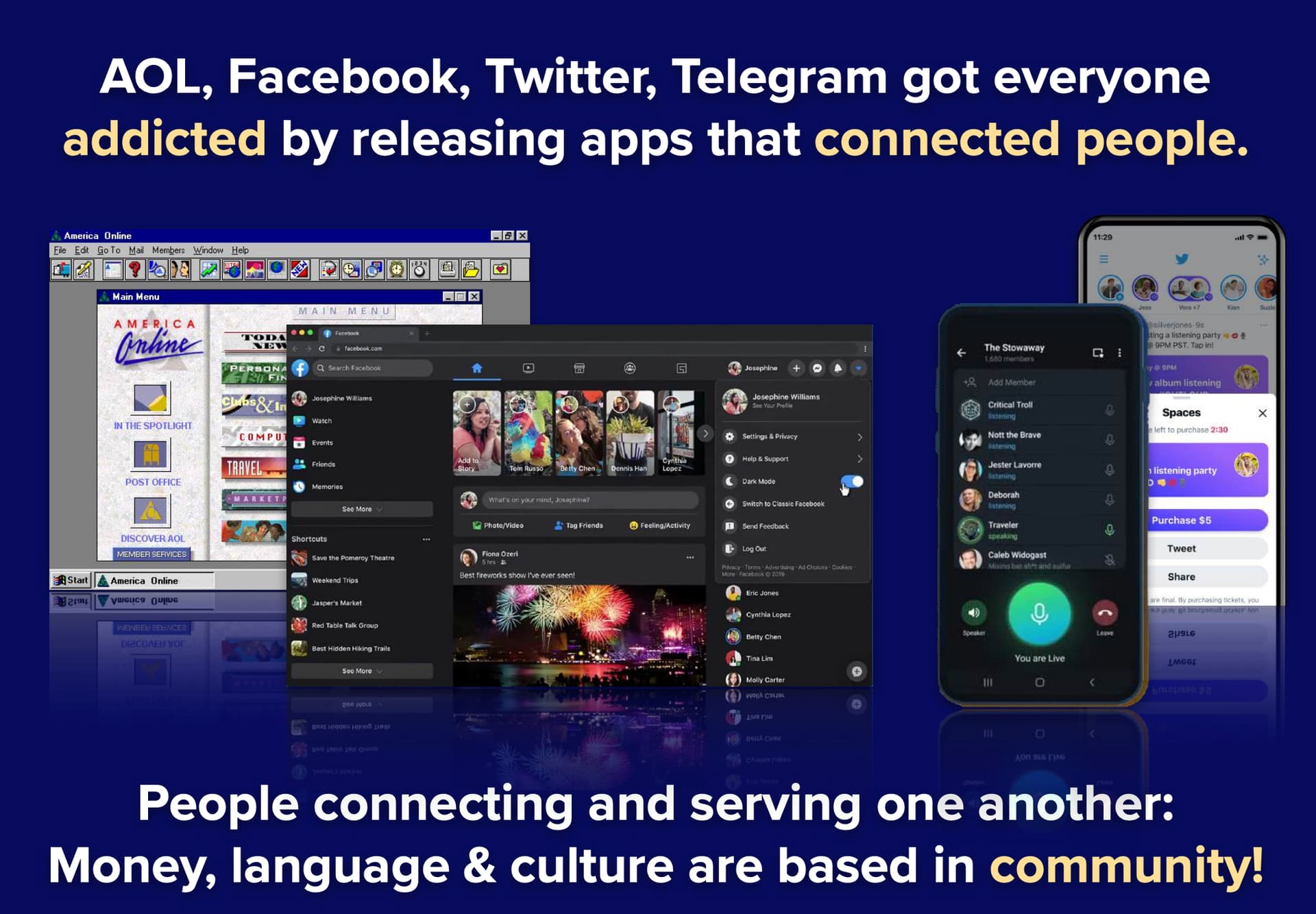
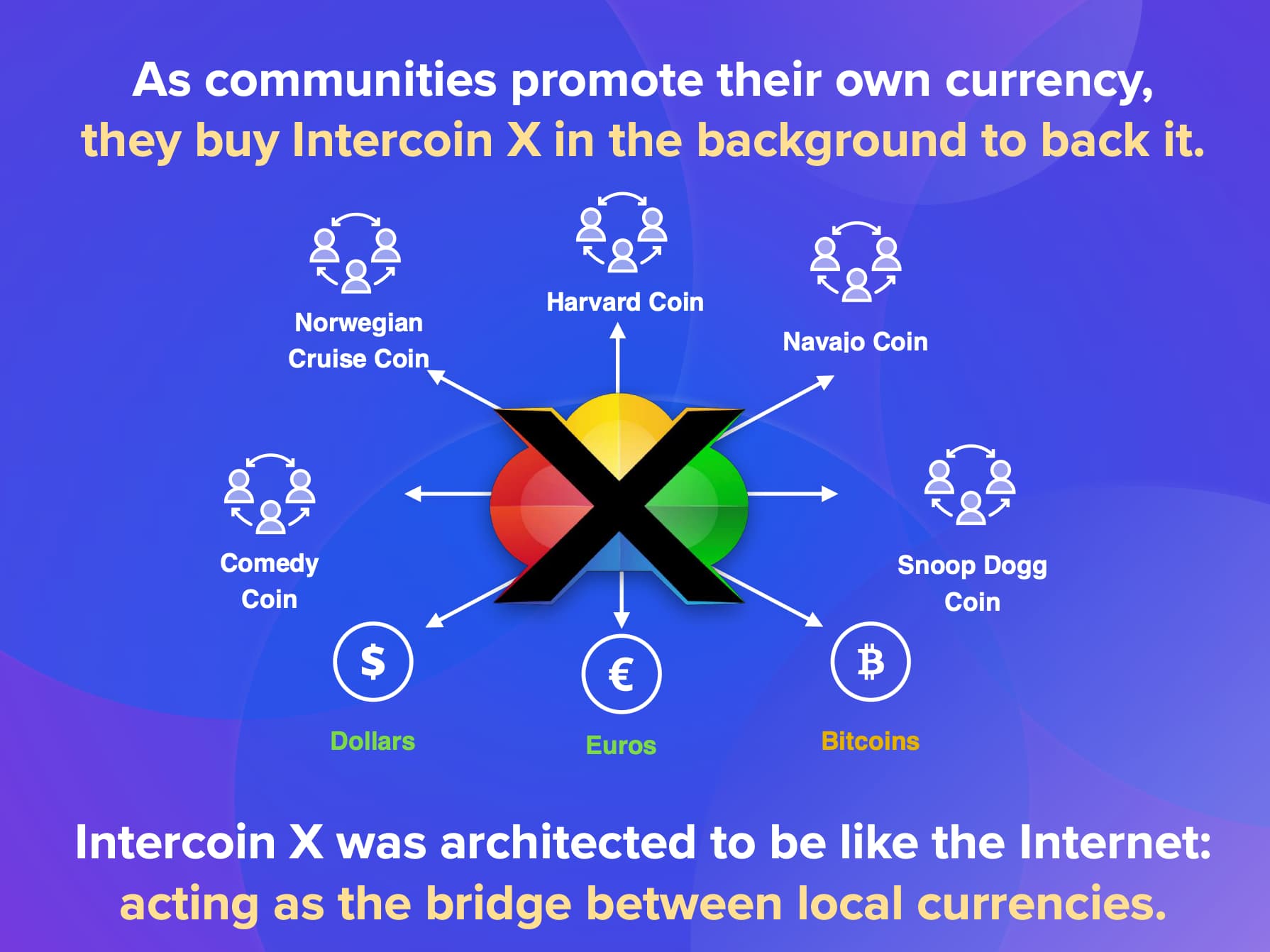
And unlike most crypto projects that pay others to “shill” their coin, we actually give communities white-labeled solutions and help them promote their own currency to their own members. We’re designing Intercoin X to be used as a settlement layer in the background, not marketed to the public. In fact, no one can hold Intercoin X except community smart contracts, making it neither a security nor a commodity. (See 4. Regulations)
If you want to learn more, and participate in the upcoming launch of ITR on public markets, you can review our data room for investors:
4. Regulations
We’ve always designed our projects and fundraising to be compliant with regulations. In fact, we treat the regulatory landscape just as we treat the technological one: as an opportunity for innovation within the rules.
When we raised our first $555,000, we took advantage of exemptions like Regulation D and Regulation S. Our advisors include the very people who wrote Regulation S at the SEC, and we interviewed them on our YouTube channel.
Unlike most projects in the space, Intercoin has cleanly separated the ITR token (which it treated as a security) from the Intercoin network and INTERCOIN X settlement currency, which is designed to be neither a security nor a commodity. We also looked at how to limit our exposure under FINCEN, OFAC and even FATCA.
The vast majority of projects in the crypto space are zero-sum games: for someone to win, someone else has to lose. By contrast, Intercoin focuses on helping grow value of existing networks and economies, in existing communities, whether they be online or offline. Buyers of ITR have two options:
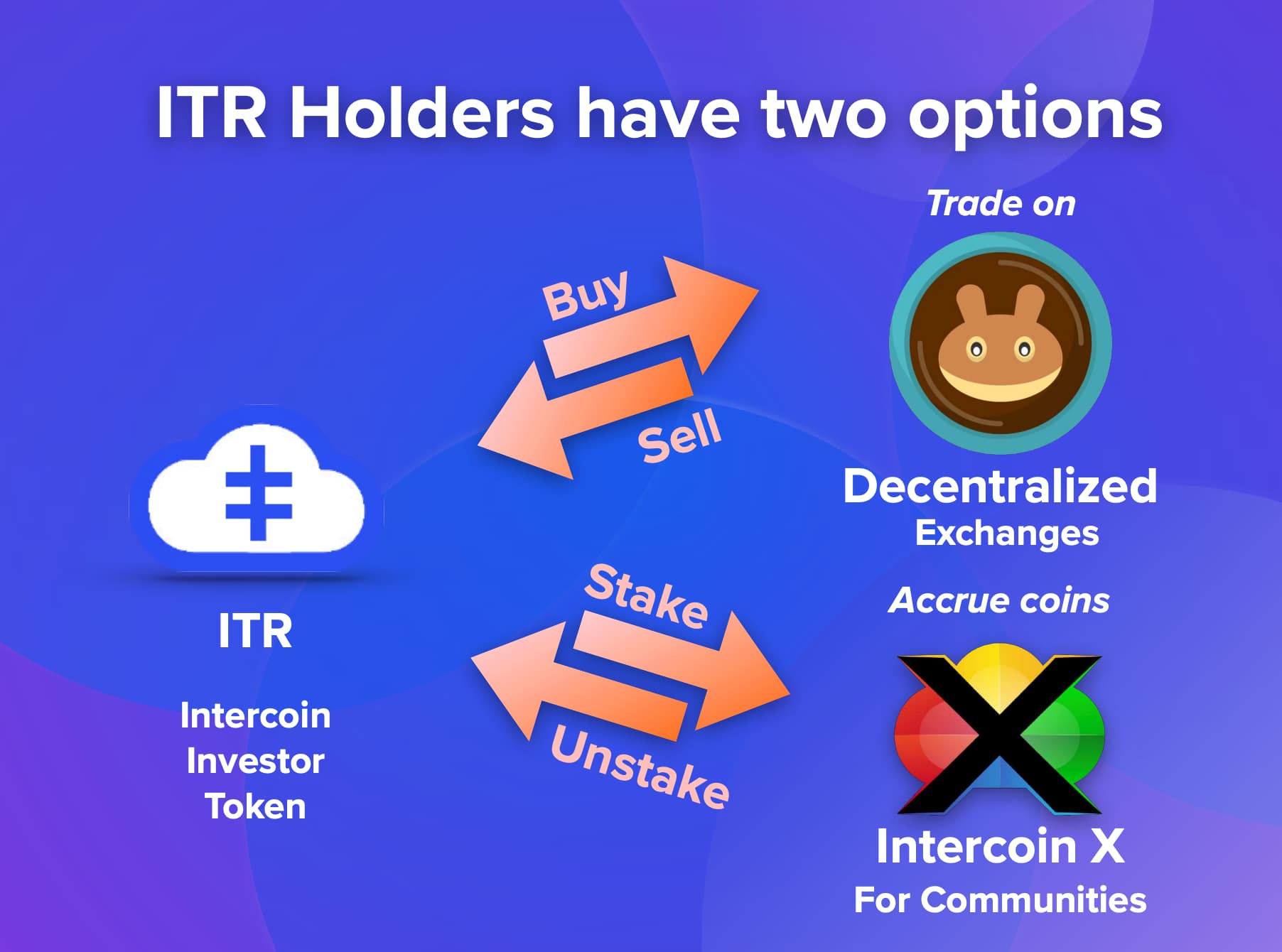
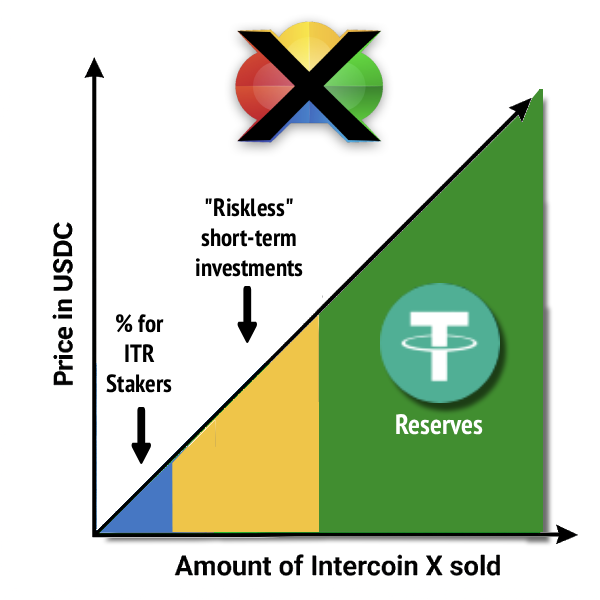
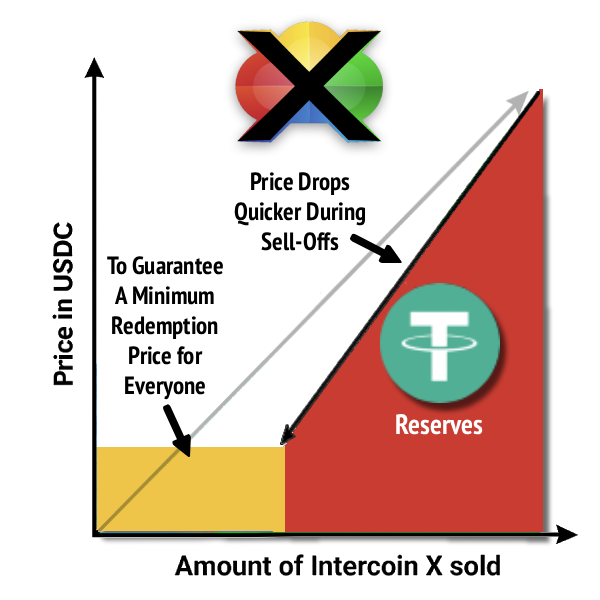
Staking ITR for years represents a real investment into the Intercoin X community. Under the Howey test, this is like planting the trees in the orange groves, letting them bear fruit. The fruit is in the form of % profits from the growth of Intercoin’s worldwide ecosystem. The more communities join, the more local coins they issue, the more the ecosystem grows. The tokenomics are designed so responsibly that staker profits are taken from the tail end of the bonding curves, from liquidity at low price points that will likely never be visited again. The tokenomics are also designed to mitigate sell-offs and guarantee a minimum redemption price in the worst possible cases. Intercoin X is designed to back a lot of communities, so unlike most crypto assets, it is designed to never drop more than e.g. 80%.
This year, we’ve raised small amounts of money from strategic investors and partners around the world. Canada. Dubai. We returned money to those who called their notes. And now they are re-investing.
For those of you wondering when the ITR token will go public. We needed to be very careful to make sure it happens properly. Over the years, we’ve learned from projects like Kin and LBRY that have had to abandon their companies because they ran afoul of the SEC:
5. Local
Intercoin is backed by real everyday local commerce, and we are starting with Restaurants. Some of our investors, who called their notes years ago and made a profit, are now re-investing with us into a startup we are spinning off to target restaurants.
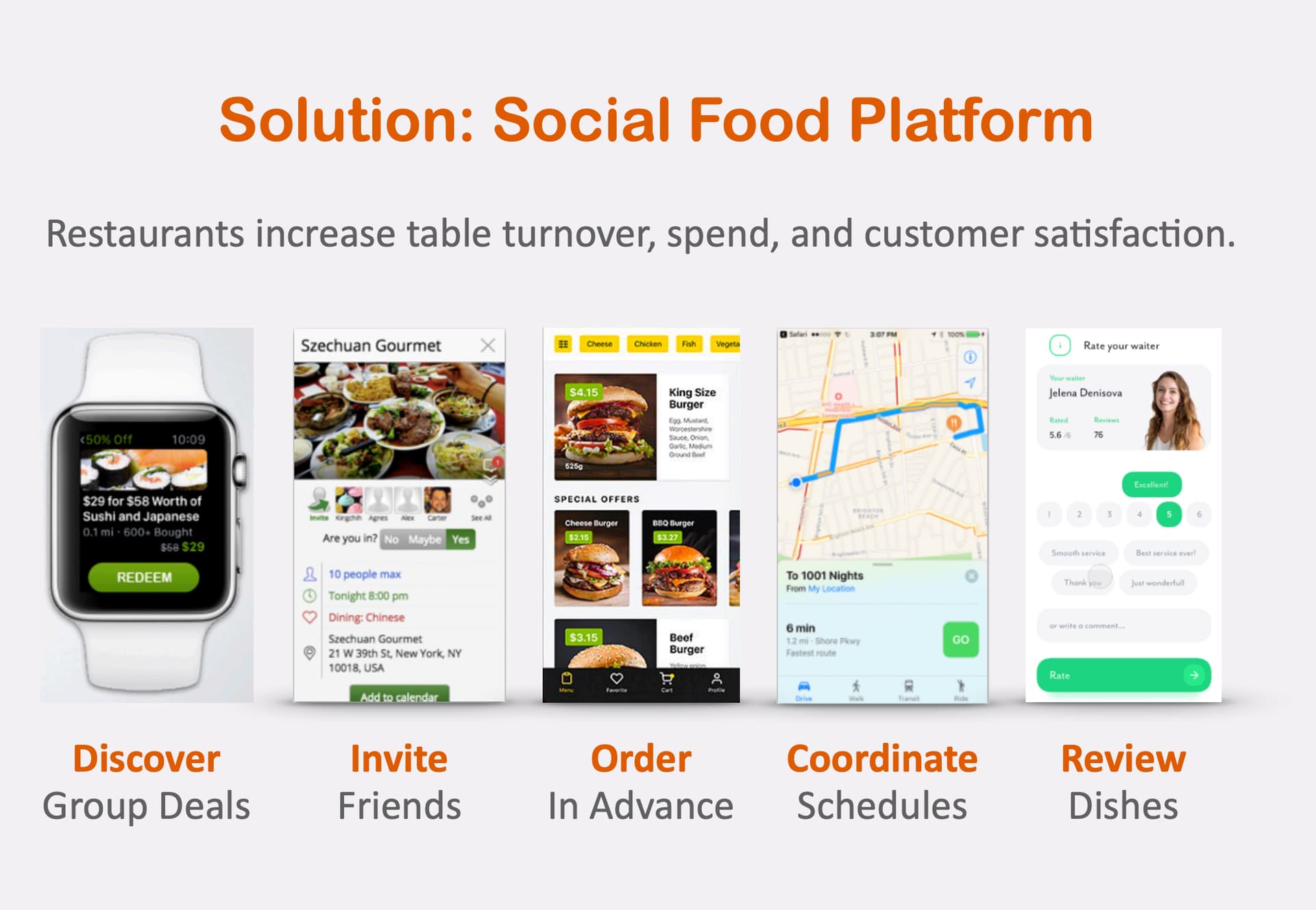
We’re solving a real problem for restaurants: filling tables at times when they’re empty. To do this, we’re connecting them to local communities, offering group discounts, and offering rewards in their own currency (loyalty points). We’re also solving a problem for people who just want to gather others together for dinner or happy hour after work, and score group deals.
We will eventually offer a way for the restaurants to join the Intercoin network, so that points earned in one restaurant can be used across other restaurants and communities. Restaurants that do this will end up with compelling advertisements to people who ate at other restaurants – we’re reinventing both advertising and loyalty programs. You can see more at https://dining.site/deck.pdf
In general, local communities joining the Intercoin network is like a house with solar panels joining the electric grid: they gain efficiencies they would not otherwise have, by going it alone. Everything, however, is voluntary:
6. Global
We’re working on one more project, backed by libertarian investors who want to see an uncensorable platform for streamers to publish content and get paid for it with cryptocurrency globally. To do this, we are building on peer-to-peer livestreaming technology we already have:
In the next couple months, we will be adding support for micropayments, on-chain settlement and payouts on any EVM chain using our IncomeContract. We also plan to implement recurring subscriptions and membership fees using our SubscriptionContract with price discovery being done by our AuctionContract.
This will be very different than LBRY, Sia or other previous work. 99% of the economic activity will take place off-chain, yet will involve cryptographic privacy, integrity checks, Merkle proofs, and more.
Just like we started our Local commerce off with Restaurants (people need food), we start off our Global commerce off with Streamers (creators of digital content). In this latter effort, we are building the world envisioned by Albert Wenger in his book, World After Capital.
You can follow the progress here:
7. Teaching
Building Web5 technology requires innovating across at least three areas: Technology, Economics, and Regulations. We run YouTube channel where we interview some of the most relevant people in each of these areas, and we’ve already had two seasons that featured Noam Chomsky, Patri Friedman (grandson of Milton Friedman), community currency economists, technologists, and regulators. You can see it at https://youtube.com/Intercoin
Our company’s advisors include some of the pioneers and primary experts in the fields we operate. One of them is Sara Hanks, who actually wrote regulation S at the SEC. We interview them on our channel. In this video you can see all the different ways we are able to legally raise money, and help our customers do the same, using crypto rails:
This year our founder, Greg Magarshak, has taught an AI course at IE NYC College, the New York chapter of the famous IE Business School based in Madrid:
He is now preparing to teach a paid course to professionals in New York City about investing in themselves, building a community around their brand, and growing their network. Everyone taking the course will learn how to launch a startup, qualify for $100K+ in free cloud hosting credits from Amazon, Microsoft, etc. and be given the software to help monetize those credits on autopilot and turn them into real businesses, while serving local communities. This is a viral movement, and every graduate of the course will be receiving their own app, their own coin, ITR tokens, and inviting others to l earn through word of mouth. We are using our own technology to grow our own movement. It will leverage our YouTube channel, our Twitter Integrations and Telegram Bots, our Discourse (what you’re reading now) and teach others to do so as well.
Here is an early talk Greg gave in Dubai, organized by lawyer and friend Gordon Einstein:

8. Moonshots
We’ve done some ambitious things over the years:
-
Back in 2018, we were the first to roll out monero mining as a way to pay for our apps, and ended up being covered by the BBC, Newsweek and many others. That coverage was accidental.
-
Back in 2019 we painted a giant mural for thousands of cars going to Manhattan to see. The mural is still there today.
-
Back in 2020 we built the yang2020.app to support Andrew Yang’s Presidential campaign, with “Yang Gangs” around the country signing up.
-
Back in 2023, LA Weekly wrote about our efforts to liberate people from Big Tech and promote healthy communities.
While launching Intercoin grassroots with Restaurants (local) and Streamers (global), we are simultaneously pursuing several ambitious moonshot efforts that have started to bear some fruit:
-
Working with entire countries to release their own coins. We have been speaking with people in the current government of Liberia – one of the poorest per-capita countries on Earth – to launch their own coin that can be crowdfunded. See http://intercoin.org/liberia.pdf
-
Woking with refugee populations to release their own coins. We have been speaking with the people behind the Rohingya Project – one of the largest stateless diasporas on Earth – to help launch their own social network and coin. See rcoin – Rohingya Project – Financial and Social Inclusion Platform for Stateless
Summing up
In short, 2025 has been quite eventful! It seems the momentum is building for 2026 to be our breakout year. If you want to get involved, feel free to fill out the form at https://intercoin.org and tell us about yourself. Are you an investor? A technologist? A journalist? A community leader? Do you like what we’re doing and find it a breath of fresh air in the crypto space? We are looking for fellow-travelers and strategic partners. At the end of the form, you’ll get our calendly and have a chance to schedule a meeting. We look forward to hearing from you.